A dental crown is a cap that covers a damaged or weakened tooth. It restores the tooth’s shape, strength, and function — and in many situations, it’s the right way to save a tooth that a filling alone can’t fix.
Traditionally, getting a crown meant two separate appointments spread over one to three weeks. You’d come in, get the tooth prepared, wear a temporary crown home, and then come back once the permanent crown arrived from an external lab. For most people, that means two rounds of time off work, two trips to the practice, and a couple of weeks of managing a temporary restoration that isn’t meant to last.
CEREC changes that. It allows a custom ceramic crown to be designed, milled, and fitted in a single visit — no temporary crown, no second appointment, no impression putty. Here’s how it works, what it’s used for, and when it might be the right approach for your situation.
What CEREC Stands For
CEREC is short for Chairside Economical Restoration of Esthetic Ceramics. The technology was developed in the mid-1980s and has been used clinically for over 35 years — so while it might sound cutting-edge, it’s a well-established system that’s been refined significantly over the decades. Many patients are surprised to learn it’s not new.
The core principle is straightforward: instead of shipping an impression to an external laboratory in the CBD and waiting for the result, the entire process of designing and manufacturing the restoration happens on-site at the practice, in the same appointment.
At Smile Spot Mawson Lakes on Coventry Street, the CEREC milling unit sits in the practice. The crown doesn’t leave the building.
The Three Stages of a CEREC Crown
1. Digital scanning
Rather than impression trays filled with putty — which some people find uncomfortable — the tooth is captured with an intraoral scanner. This small, wand-like device takes thousands of images per second and builds a precise 3D digital model of the prepared tooth and surrounding teeth.
The scan takes a few minutes. The result is a detailed digital model that can be reviewed on-screen and adjusted before anything is manufactured — far more flexibility than a physical impression that’s already set.
2. Computer-aided design
Once the scan is complete, the software assists in designing the restoration based on your surrounding tooth anatomy. Dr Sunny reviews and fine-tunes the shape, bite contacts, and margins on screen. This is where the precision comes in — the design is tailored to your specific tooth, not an average.
3. In-practice milling
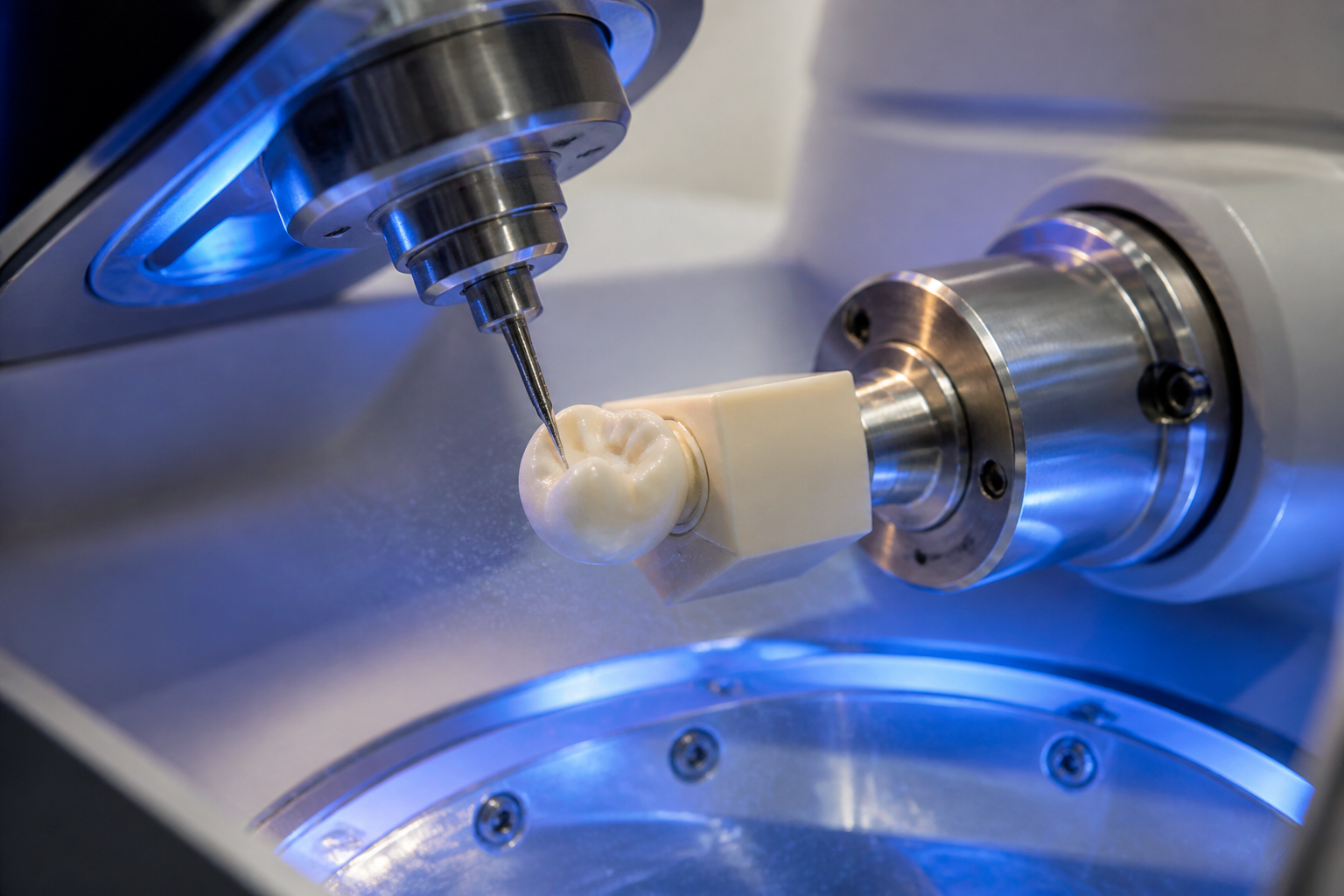
The completed design is sent wirelessly to the milling unit in the practice. From a solid block of high-quality dental ceramic, the unit carves the restoration in roughly 15 to 20 minutes. It’s then polished, colour-matched to your surrounding teeth, and bonded into place.
Total chair time is typically around 1.5 to 2 hours depending on complexity — but you leave with a permanent crown, not a temporary one.
What CEREC Can Create
Crowns are the most common application, but the system can produce a few different types of restoration depending on how much tooth structure remains:
Inlays sit within the cusps of a back tooth — similar to a large filling, but made from durable ceramic rather than composite resin. They’re generally more hardwearing and longer-lasting.
Onlays are larger, covering one or more of the tooth’s cusps. Sometimes called a “partial crown,” they’re used when more support is needed but a full crown isn’t necessary.
Veneers are thin ceramic shells bonded to the front surface of teeth. They’re used to address discolouration, chips, worn edges, or minor aesthetic concerns.
Full crowns cap the entire visible portion of a tooth. They’re typically used when a tooth is heavily damaged, has had root canal treatment, or is too weakened to hold a conventional restoration.
Your dentist will advise on the appropriate restoration type based on how much healthy tooth structure remains and what the tooth needs to function well long-term. Learn more about our general dentistry services or our dedicated same-day crowns page.
CEREC vs the Traditional Two-Appointment Process
With the traditional approach, your first appointment involves preparing the tooth and taking impressions. A temporary crown is placed while the permanent restoration is made at a dental laboratory — usually over one to two weeks. At the second appointment, the temporary is removed, and the permanent crown is checked, adjusted, and cemented.
That process works. But it has real costs in terms of time.
For someone working at Technology Park Adelaide or out at Edinburgh RAAF, two separate half-day appointments are two separate hits to your leave balance. For a parent in Ingle Farm or Para Hills fitting treatment around school pickup, coordinating two separate appointments weeks apart is genuinely complicated. For a retail worker at The Promenade with a rotating roster, finding two matching appointment slots that don’t clash with your shifts is its own puzzle.
And there’s the practical issue of the temporary crown itself — these aren’t made to last, and most people are told to be careful with certain foods for the duration.
CEREC consolidates everything into one visit.
Materials: What the Crown Is Made From
CEREC restorations are made from high-strength dental ceramics — typically leucite-reinforced ceramic or lithium disilicate (a material sometimes known by the brand name e.max). Both are tooth-coloured, metal-free, and designed to match the appearance and translucency of natural tooth structure.
These materials have been used in dentistry for many years. Lithium disilicate in particular has a strong track record for both aesthetics and durability, and it’s the material most commonly used for CEREC crowns on back teeth where bite forces are highest.
Your restoration is colour-matched at the time of fitting, so it blends with the surrounding teeth rather than standing out.
When CEREC Might Not Be the Right Fit
CEREC suits a wide range of situations, but not every case is ideal for in-practice milling. Some restorations — particularly those with unusual anatomy, significant aesthetic complexity, or specific material requirements that go beyond what the in-house ceramic blocks can achieve — may produce a better result through a laboratory-fabricated crown.
Lab-based restorations give dental technicians additional tools, layering techniques, and time to work on particularly complex cases. If that’s the right approach for your situation, we’ll say so clearly rather than recommending CEREC for the sake of it.
At your dental checkup, we assess the specific condition of the tooth and give you a straightforward recommendation based on what’s likely to give you the best outcome.
How Evening Hours and CEREC Work Together
Mawson Lakes is a suburb with a young, busy population — median age around 33 — and most people here are working full-time schedules that don’t leave a lot of room for multiple half-days at the dentist. People drive in from Paralowie, Parafield Gardens, Salisbury, and across the northern suburbs. The last thing anyone wants is to make that trip twice, weeks apart.
That’s where evening hours and same-day technology actually combine to solve the same problem from two angles.
Smile Spot is open Monday to Thursday until 7pm. Most Adelaide dental practices close at 5pm — so a 5:30pm or 6pm appointment after work isn’t something you’ll find easily elsewhere in the north. Add CEREC into the equation and you can book a single evening slot, have the entire crown process completed before 8pm, and go home with a permanent restoration in place. One trip. One afternoon of annual leave, or none at all for someone on a flexible arrangement.
That matters for the UniSA students at the Mawson Lakes campus who have a free afternoon between lectures. It matters for shift workers at the Edinburgh RAAF base with irregular hours who can’t predict their schedule two weeks out. It matters for parents in Para Hills who can come in at 5pm, be done by 7pm, and still make it home in time.
We have digital x-rays on-site, HICAPS for on-the-spot health fund claiming (we’re a preferred provider for Bupa Members First Platinum, nib, CBHS, and smile.com.au), and DentiCare interest-free payment plans available if you’d prefer to spread the cost.
Find Out if a CEREC Crown Is Right for You
If you’ve been told you need a crown — or if you have a tooth that’s been giving you trouble and hasn’t been seen in a while — a consultation at Smile Spot can give you a clear picture of what’s going on and what your options are.
Dr Sunny (BDSc Griffith 2012) sees patients at 1/3 Coventry Street, Mawson Lakes SA 5095. He also speaks Punjabi if that’s easier for you.
Book at Smile Spot — call (08) 8258 0650 or book online.
We’re open Monday to Thursday 10am–7pm and Friday 9am–2pm.
Any surgical or invasive procedure carries risks. Before proceeding, seek a second opinion from an appropriately qualified health practitioner.