Dental implants at Smile Spot Mawson Lakes replace missing teeth at the root — restoring full chewing function and a natural appearance that a denture or bridge cannot match. Our team has a special interest in implants and will guide you through every stage of the process.
When a tooth is lost — whether through decay, gum disease, trauma, or extraction — the effects extend beyond the visible gap. The surrounding teeth begin to shift gradually toward the space. The opposing tooth can over-erupt. Perhaps most significantly, the jawbone in the area of the missing root begins to resorb, or shrink, over time because it no longer receives the stimulation that a tooth root provides.
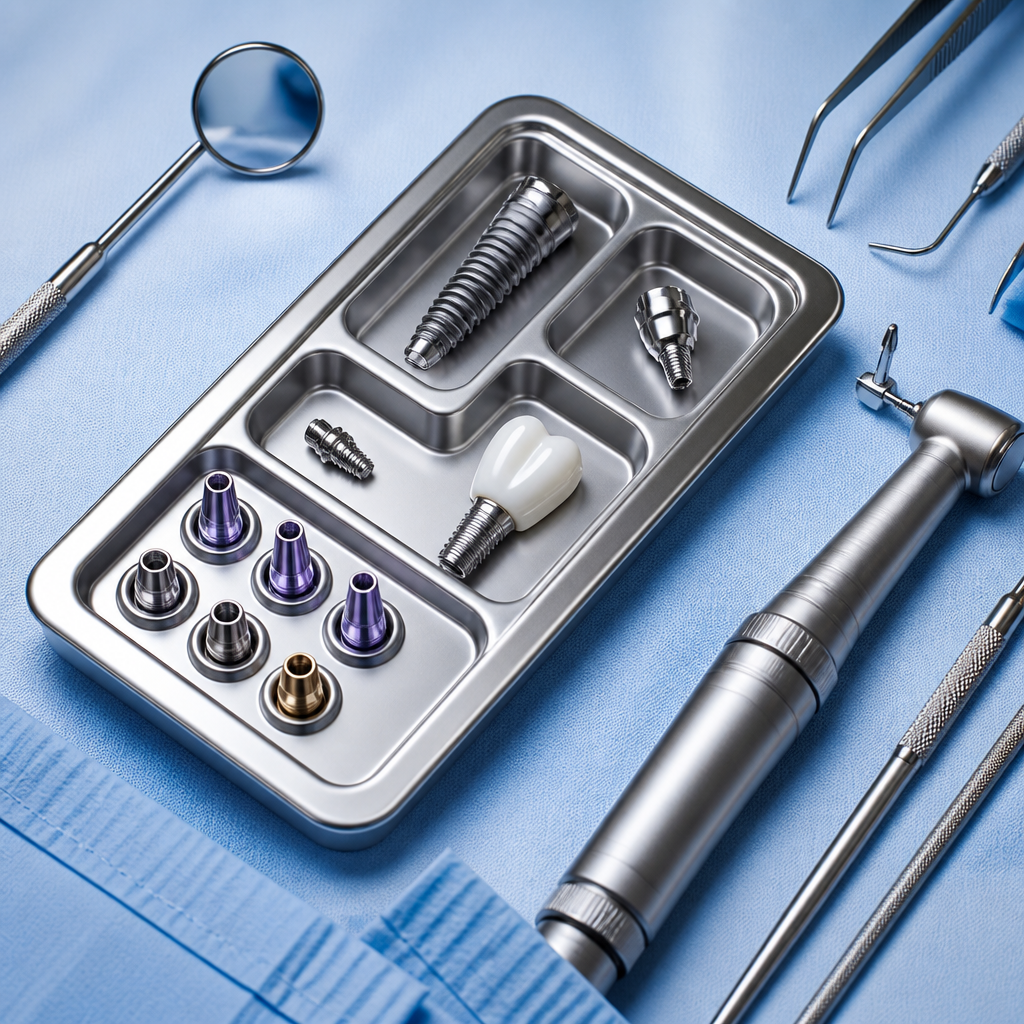
Traditional options like bridges and partial dentures address the visible gap but do not address the root. A dental implant does. By placing a titanium post directly into the jawbone, an implant recreates the function of a natural tooth root — stimulating the bone, stabilising the surrounding teeth, and providing a secure anchor for the crown that sits above the gum line.
At Smile Spot Mawson Lakes, our team has a special interest in dental implants. Patients come to us from across the northern Adelaide area — from Mawson Lakes itself, and from Parafield, Salisbury, Ingle Farm, Para Hills, and beyond — for implant consultations and treatment.
Before any treatment begins, we carry out a thorough assessment of your jawbone density, gum health, bite, and overall dental health. X-rays are taken, and in some cases a cone beam CT scan is recommended to give a three-dimensional view of the available bone. We will review your medical history, discuss any factors that may affect healing, and map out a full treatment plan including timeline, number of visits, and costs. There is no obligation to proceed after this assessment.
If the jawbone has resorbed to the point where there is insufficient volume to support an implant, bone grafting may be recommended. This procedure adds bone material — often synthetic or from a bone bank — to rebuild the site before implant placement. Grafting adds time to the overall treatment, typically several months, but it is what makes implants possible for many patients who would otherwise not be candidates. Individual requirements vary, and not every patient needs a graft.
The titanium post is surgically placed into the jawbone under local anaesthetic. The procedure is generally well tolerated, and most patients return to normal activities within one to two days. Some swelling and discomfort is expected in the following days and can be managed with over-the-counter pain relief. The gum is then closed over or around the implant to allow healing to begin.
Over the following weeks to months, the implant gradually fuses with the surrounding bone through a natural process called osseointegration. This is the biological foundation that makes the implant stable and durable. During this healing period, a temporary crown or denture may be placed if needed. Regular check-ups allow us to monitor progress.
Once osseointegration is confirmed, an abutment — a small connector — is attached to the implant post, and a custom-made crown is fitted on top. The crown is carefully colour-matched and shaped to blend with your natural teeth. The result looks, feels, and functions like the tooth you lost.
When several teeth are missing or need to be replaced, individual implants for every tooth may not always be the most appropriate or cost-effective solution. Implant-supported bridges use two or more implants as anchors to support a fixed bridge spanning three, four, or more teeth. This restores the appearance and function of a full section of the mouth without placing an implant at every position.
For patients who have lost most or all of their teeth, implant-supported dentures offer a significant improvement over conventional removable dentures. A small number of strategically placed implants — typically four to six — support a full-arch denture that is stable, does not move during eating or speaking, and continues to stimulate the jawbone. Your dentist at Smile Spot Mawson Lakes will discuss which option is appropriate for your situation.
*Individual results may vary. Implant longevity depends on oral hygiene, general health, bone quality, and lifestyle factors including smoking.
Suitable candidates generally have adequate bone density in the jaw, healthy gums, and no uncontrolled medical conditions that affect healing. Smoking can affect implant outcomes and will be discussed honestly at your consultation. A thorough assessment — which may include X-rays or a CT scan — is needed to confirm suitability. Individual results may vary.
The placement is performed under local anaesthetic, so you should not feel pain during the procedure. Some soreness, swelling, or bruising in the days following is normal and typically manageable with over-the-counter pain relief. Most patients find the procedure more comfortable than they anticipated.
The process from implant placement to final crown fitting usually takes several months, as the implant needs time to fuse with the jawbone — a process called osseointegration. If bone grafting is required beforehand, the timeline extends further. Your dentist will map out the full timeline at your consultation.
A single implant replaces one missing tooth with its own independent root and crown. Where multiple teeth are missing, implant-supported bridges or dentures use two or more implants as anchors to support a larger restoration — avoiding the need for one implant per tooth. Your dentist will recommend the most appropriate option based on how many teeth are missing and the condition of your jawbone.
Book an implant consultation at Smile Spot Mawson Lakes. We'll walk you through the full process, your suitability, the timeline, and the costs — no pressure, just clear information.
See our special offers for new patients →