Many people grind or clench their teeth during sleep without realising it. At Smile Spot in Mawson Lakes, a custom-fitted night guard absorbs the forces of grinding before they damage your teeth, relieving the jaw soreness, headaches, and wear that bruxism causes over time.
Bruxism is the term used to describe the habitual grinding, clenching, or gnashing of teeth. It most commonly occurs during sleep, which means many people are entirely unaware they do it. The forces generated during sleep grinding can be far greater than those produced during normal chewing, and over months and years this takes a significant toll on tooth enamel, restorations, and the jaw joint.
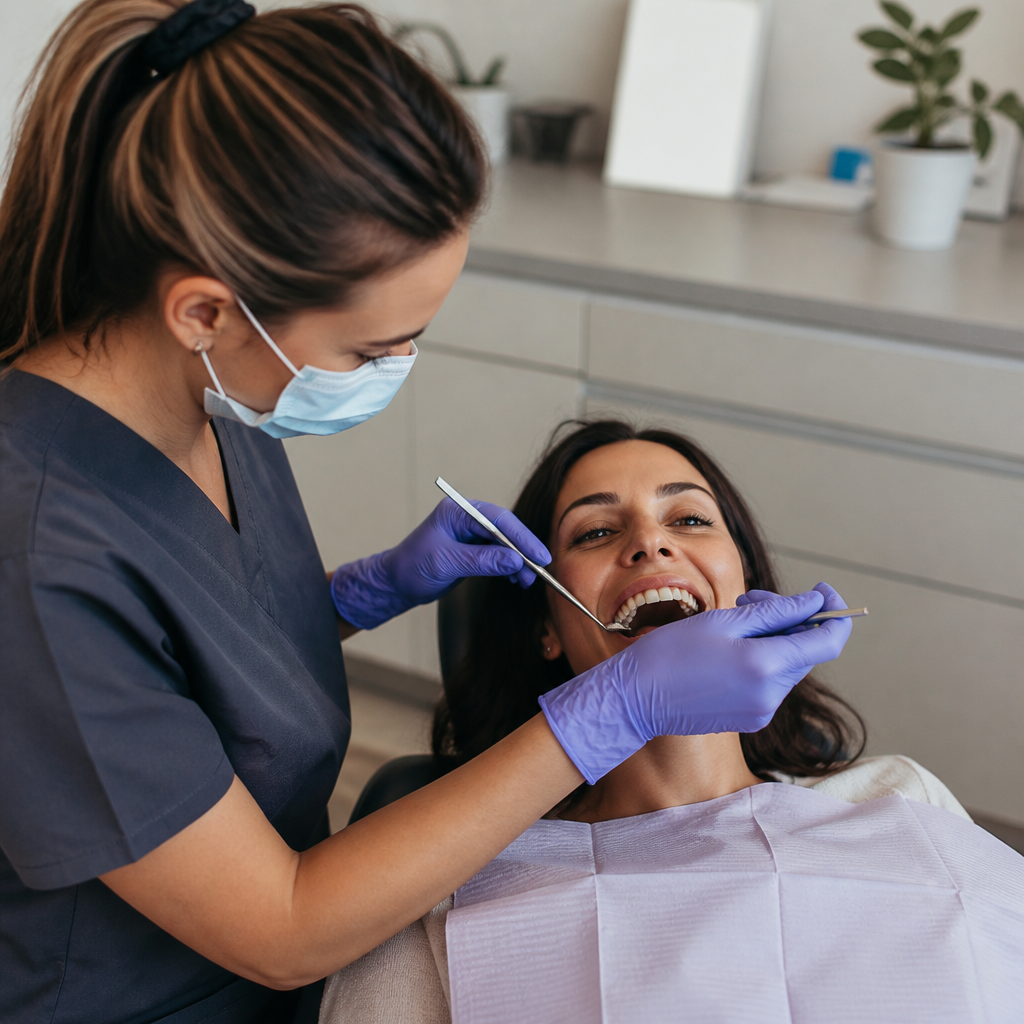
At Smile Spot in Mawson Lakes, we look for signs of bruxism at every check-up appointment. Flattened biting surfaces, worn enamel, chipping along the edges of front teeth, cracked fillings, and sensitivity in multiple teeth can all indicate that grinding is occurring. We may also notice muscle tenderness or clicking in the jaw joint, and we will ask about headaches, facial pain, and sleep quality as part of our assessment.
Bruxism is thought to be linked to stress and anxiety in many people, though it can also be associated with sleep disorders such as sleep apnoea, certain medications, and an uneven bite. Regardless of the underlying cause, a custom night guard is the most effective dental approach to managing the damage and discomfort it causes.
A custom occlusal splint — more commonly called a night guard — is a hard or semi-hard acrylic appliance worn over the upper or lower teeth during sleep. It creates a barrier between the upper and lower teeth, so that any grinding forces are absorbed by the guard material rather than wearing away tooth enamel or stressing the jaw joint and surrounding muscles.
The flat surface of the guard also eliminates the interlocking effect of the natural tooth cusps, which can perpetuate the grinding pattern. By providing a smooth, even contact surface, the splint encourages the jaw muscles to relax into a more natural position during sleep. Many patients notice a reduction in jaw muscle soreness and morning headaches after just a few weeks of wearing a night guard consistently.
For patients who have crowns, veneers, implant crowns, or porcelain bridges, a night guard is particularly important. These restorations, though strong, are not designed to absorb the repetitive forces of grinding and can fracture, chip, or debond if left unprotected. A night guard is a cost-effective way of protecting a significant investment in dental work.
The process begins at your first appointment, where we take impressions of your teeth. These impressions are sent to a dental laboratory where your night guard is custom fabricated to fit your exact bite. The fabrication usually takes one to two weeks.
At the fitting appointment, we try the guard in, check that it seats securely on the teeth, and assess the bite across the splint surface to ensure even contact. Minor adjustments are made at the chairside until the fit and bite feel comfortable. We will also discuss how to wear it in and go through the care instructions so you can get the most out of it.
Most patients find that it takes one to two weeks to get used to sleeping with a night guard in place. Starting by wearing it for a few hours at a time and gradually increasing to a full night can make the adjustment period easier. If after a couple of weeks it still feels very uncomfortable or is affecting your sleep, come back in and we will assess the fit. Our Mawson Lakes clinic is conveniently located on Coventry Street, with easy parking, and our evening hours mean appointments can be scheduled around work commitments for patients from Mawson Lakes, Salisbury, Parafield, Ingle Farm, and Para Hills.
The temporomandibular joint, or TMJ, is the hinge joint that connects your jaw to your skull on either side of your face. Bruxism places significant repetitive strain on this joint and the surrounding muscles, which can lead to a range of symptoms including jaw clicking, locking, difficulty opening fully, pain in the ear region, neck stiffness, and frequent headaches or migraines that originate from jaw muscle tension.
Collectively these symptoms are often referred to as temporomandibular disorder, or TMD. A night guard is frequently the first-line approach to managing bruxism-related TMD symptoms because it reduces the load on the joint and gives the surrounding muscles a chance to relax and recover. For more significant TMJ involvement, we may recommend additional assessment or refer to a specialist when appropriate.
If you have been experiencing jaw pain, clicking, or headaches and have not yet connected these to your teeth or jaw, it is worth having an assessment at Smile Spot. We regularly see patients from across northern Adelaide who have been managing these symptoms for years without realising that a straightforward dental appliance might significantly improve their quality of life.
Many people are not aware they grind at night until a partner mentions the noise, or until their dentist notices the signs at a check-up. Common indicators include flattened or chipped tooth surfaces, increased tooth sensitivity, a tired or sore jaw on waking, frequent headaches particularly in the morning, and facial muscle tenderness. If you have any of these symptoms, mention them at your next appointment and we will examine your teeth carefully for signs of bruxism.
A night guard does not stop the grinding behaviour itself, but it redirects the force onto the guard material rather than your tooth enamel, crowns, and fillings. This prevents further wear and damage while wearing it, and many people find that a well-fitted night guard also reduces jaw muscle tension because the splint is designed to position the jaw in a more relaxed, comfortable position. If grinding is stress-related, addressing contributing stress factors alongside the night guard may help manage the frequency of episodes.
Custom-made night guards from a dental practice are significantly better than over-the-counter options. Chemist guards are generic sizes that often fit poorly, can be uncomfortable enough that people stop wearing them, and may not distribute the bite forces evenly. A custom guard is fabricated on a model of your exact teeth, fits precisely, stays in place during the night, and is designed to provide the correct bite position for your jaw. The difference in comfort and wearability is substantial.
Rinse your night guard with cold water in the morning and brush it gently with a soft toothbrush — not toothpaste, which is too abrasive. Let it air-dry fully before storing it in the protective case provided. Keep it away from heat sources, including hot water and direct sunlight, as heat can warp the material. Bring it to your regular check-up appointments so we can assess its condition and check the fit. Most night guards last several years with proper care.
Book a consultation at Smile Spot Mawson Lakes and we will assess whether a custom night guard is the right solution for you. Evening appointments are available Monday to Thursday.
See our special offers for new patients →